Tuesday, August 30, 2022

Four Wives...

Once upon a time there was a rich King who had four wives. He loved the 4th wife the most
and adorned her with rich robes and treated her to the finest 
of delicacies. He gave her nothing but the best.

He also loved the 3rd wife very much and was always showing her off to neighboring kingdoms. However, he feared that one day she would leave him for another.

He also loved his 2nd wife. She was his confidant and was always kind, considerate and patient with him. Whenever the King faced a problem, he could confide in her, and she would help him get through the difficult times.

The King's 1st wife was a very loyal partner and had made great contributions in maintaining his wealth and kingdom. However, he did not love the first wife. Although she loved him deeply, he hardly took notice of her!

One day, the King fell ill and he knew his time was short. He thought of his luxurious life and wondered, I now have four wives with me, but when I die, I'll be all alone."

Thus, he asked the 4th wife, "I loved you the most, endowed you with the finest clothing and showered great care over you. Now that I'm dying, will you follow me and keep me company?"

"No way!" replied the 4th wife, and she walked away without another word. Her answer cut like a sharp knife right into his heart.

The sad King then asked the 3rd wife, "I loved you all my life. Now that I'm dying, will you follow me and keep me company?" "No!" replied the 3rd wife. "Life is too good! When you die, I'm going to remarry!" His heart sank and turned cold.

He then asked the 2nd wife, "I have always turned to you for help and you've always been there for me. When I die, wil! l you follow me and keep me company?"

"I'm sorry, I can't help you out this time!" replied the 2nd wife. "At the very most, I can only walk with you to your grave." Her answer struck him like a bolt of lightning, and the King was devastated.

Then a voice called out: "I'll go with you. I'll follow you no matter where you go." The King looked up, and there was his first wife. She was very skinny as she suffered from malnutrition and neglect. Greatly grieved, the King said, "I should have taken much better care of you when I had the chance!"

In truth, we all have the 4 wives in our lives:

Our 4th wife is our body. No matter how much time and effort we lavish in making it look good, it will leave us when we die.

Our 3rd wife is our possessions, status and wealth. When we die, it will all go to others.

Our 2nd wife is our family and friends. No matter how much they have been there for us, the furthest they can stay by us is up to the grave.

And our 1st wife is our Soul. Often neglected in pursuit of wealth, power and pleasures of the world. However, our Soul is the only thing that will follow us wherever we go.

Cultivate, strengthen and cherish it now, for it is the only part of us that will follow us to the throne of God and continue with us throughout Eternity.

Monday, August 29, 2022

Judge Not

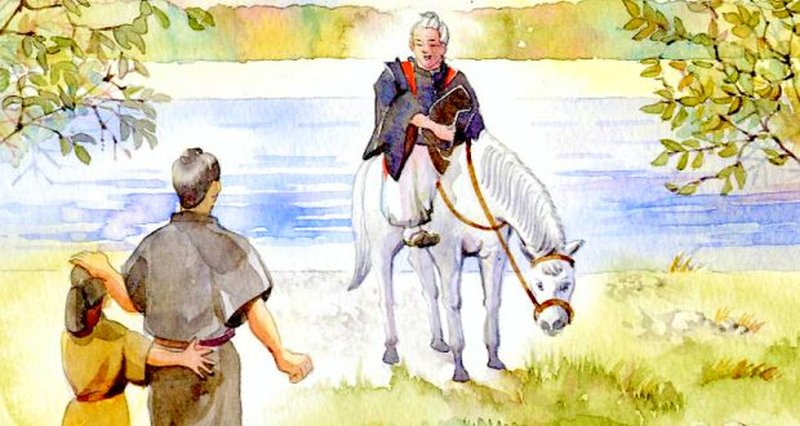
     There was an old man in a village, very poor, but even the kings were jealous of him because he had
a beautiful white horse.
  Kings offered fabulous prices for the horse, but the man would say, “This horse is not a horse to me, he is a person.  And how can you sell a person, a friend?”  The man was very poor, but he never sold the horse.  One morning, he found that the horse was not in the stable.  The whole village gathered and said, “You foolish old man!  We knew that someday the horse would be stolen.  It would have been better to sell it.  What a misfortune!”

The old man said, “Don’t go so far as to say that.  Simply say that the horse is not in the stable.  This is the fact; everything else is a judgment.  Whether it is a misfortune or a blessing I do not know, because this is just a fragment.  Who knows what is going to follow it?” 

People laughed at the old man.  They had always known that he was a little crazy.  But after fifteen days, suddenly one night the horse returned.  He had not been stolen, he had escaped into the wild.  And not only that, he brought a dozen wild horses back with him.  Again the people gathered and they said, “Old man, you were right.  This was not a misfortune, it has indeed proved to be a blessing.”  The old man said, “Again you are going to far.  Just say the horse is back, who knows whether it is a blessing or not?  It is only a fragment.  You read a single word in a sentence – how can you judge the whole book?”

This time the people did not say much, but inside they knew that he was wrong.  Twelve beautiful horses had come…  Of course it was a blessing!

The old man had an only son who started to train the wild horses.  Just a week later he fell from a horse and both his legs were broken.  The people gathered again and again they judged.  They said, “Again, you proved right!  It was a misfortune.  You only son has lost the use of his legs, and in your old age he was your only support.  Now you are poorer than ever.” 

The old man said, “You are obsessed with judgment.  Don’t go that far.  Say only that my son has broken his legs.  Nobody knows whether this is a misfortune or a blessing.  Life comes in fragments and more is never given to you.”

It happened that after a few weeks the country went to war, and all the young men of the town were forcibly taken for the military.  Only the old man’s son was left, because he was crippled.  The whole town was crying and weeping, because it was a losing fight, and they knew most of the young people would never come back.  They came to the old man and they said, “You were right, old man, this has proved to be a blessing.  Maybe your son is crippled, but he is still with you.  Our sons are gone forever.”

The man said again, “You go on and on judging.  Nobody knows!  Only say this, that your sons have been forced to enter into the army, and my son has not been forced.  But only God knows whether it is a blessing or a misfortune.”

“Judge ye not” – otherwise you will never become one with God.  With fragments you will be obsessed, with small things you jump to conclusions.  Once you judge you have stopped growing. 

      Judgment means a stale state of mind.  And mind always wants judgment, because to be in process is always hazardous and uncomfortable.  In fact, the journey never ends.  One path ends, another begins.  One door closes, another opens.  You reach a peak, a higher peak is always there.  God is an endless journey.  Only those who are so courageous that they don’t bother about the goal but are content with the journey, content just to live the moment and grow into it, only those are able to walk with God.

Friday, August 19, 2022

A Closing Thought on Social Regression

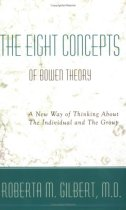
I have been passing along some thoughts over the last few days from Roberta Gilbert’s book, The Eight Concepts of Bowen Theory, that show that our society today may be in crisis. Today, I would like to pass along one final thought on this (Again from Gilbert's book)…

How many people would it take, doing just one of the following -

  • Connecting with their generations, eliminating family cutoffs
  • Educating themselves as to the facts in our society – the regression (the social crisis)
  • Becoming clear on their guiding principles, being guided by them instead of political correctedness or groupthink
  • Taking a stand, after careful consideration
  • Defining a self in their families
  • Becoming principle-guided parents, rather than projecting a worried focus

- to bring the regression to an end? One can only guess how many it would take, but it is a fascinating question.

Wednesday, August 17, 2022

An answer to Social Regression

Yesterday, I looked at some statistics from Roberta Gilbert’s book, The Eight Concepts of Bowen Theory, that show that our society today may be in crisis. That, according to Family Systems Theory, or Bowen Theory, we may be in a time the theory refers to as Social Regression.

What do we do about it? How can change the course of society? In a family system, in order for the system of change, one person in the system, preferably a parent, will need to make a stand for higher and better functioning of self. They will begin to function better in the system, and in time, the system will react differently and change in the system will come about. Can we apply this to Society as a whole?

Roberta Gilbert makes the following suggestions of how we can make a difference:

1. Learn the facts and begin to make a difference. If societal regression is to turn around, people will have to get out of denial and start learning what is really taking place in society. This will mean reading more books and searching outside the usual media sources for facts. There is little time on TV for imparting the big picture – all the facts.

2. Learn to “think systems” in families and in organizations. Under the effects of heightened anxiety, people tend not to see the “big picture” or to think systems.” Rather they tend to think “cause and effect,” laying blame (on others).

3. Get clear on one’s guiding principles and learn to think according to them rather than what society tries to dictate. If one believes the family to be important, for example, one will already be standing contrary to what much if not most of society dictates.

4. Take a stand, after careful consideration address the problems in accordance with principles. With clarity on the facts, and as much information on the process as possible, guided by one’s best principles, a stand must eventually be taken.

Tomorrow, one final thought on the problem of social regression according to family systems theory.

Monday, August 15, 2022

Social Crisis?

I have just finished a class in Family Systems Theory, and have been doing some further reading. Essentially this theory, also called Bowen Theory after its founder, Murray Bowen, indicates that we are part of a system, and we operate as part of a system. As one person in a system changes, we react to that change, and the whole system changes. I find this very interesting in that when we change, we can change the system. I can use this in counseling people to help them realize they can change the family by changing how they react in the family.

One of the concepts in Family Systems Theory is that the theory also works to affect the emotional processes in society as a whole, not just members of a family or work system. To support this concept on a society wide basis, Roberta Gilbert, in her book, “The Eight Concepts of Bowen Theory,” Gilbert suggests that we are in a period of social regression. To support this, she brings out some interesting statistics:

In 1940 the teachers in California were polled to find out what they considered the most troublesome problems they faced. The results were: Talking, Chewing gum, Making noise, Running in the halls, Getting out of line, Wearing improper clothing, and Not putting paper in the wastebasket.

Again, in 1990, fifty years later, they were polled. This time the answers were quite different: Drug Abuse, Alcohol abuse, Pregnancy, Suicide, Rape, Robbery, Assault.

In fifty years our society has changed a great deal if the schools are any indication.

Consider also that between 1963 and 1993 the crime rate went up 360%, youth crime is up 200%, teen pregnancy is up 600% and teen suicide is up 300% (now the second most important cause of death in teens, after accidents). One in five teens attempted suicide, single parents increased by 300%, SAT scores are down 7% and drug use is up over 1,000%.

These statistics show an overall deterioration in our society. If the theory is correct, and we are in a time of social regression, what can do about it? We’ll look at Gilberts ideas in tomorrow’s post…

Tuesday, April 26, 2022

The Lord will fight for you...


“The Lord will fight for you; you need only be still.”

Exodus 14:14


The scene here is the end of the Israelite time of slavery in Egypt.  Moses went to Egypt to
ask Pharoah to let the Israelites go.  He said no.  God sent a sign, a plague of blood, all the waters in Egypt turned to blood.  Moses again asked Pharoah, Pharoah again said no.  So God sent more plagues – frogs, gnats, flies, all the livestock in Egypt died, people broke out in boils, hail destroyed crops, locusts ate what was left, the land turned dark for three days, and after each plague, Moses asked Pharoah, Pharoah said no.  Finally the last plague was the death of the firstborn, every firstborn son in Egypt died, and Pharoah finally said go.

But we saw in Exodus 14:5, “When the king of Egypt was told that the people had fled [the Israelite people – the Egyptian slaves], Pharoah and his officials changed their minds about them and said, ‘What have we done?  We have let the Israelites go and have lost their service.’”

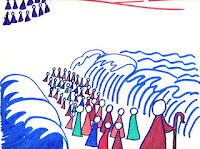
So Pharoah pursued them, we heard the numbers of chariots, all of Pharoah’s army was in pursuit of the Israelites.  And the Israelites were camped out along the Red Sea, seemingly trapped when the army was approaching.  If we kept reading we would have seen the miraculous deliverance, the parting of the sea, the Israelites crossing on dry ground, the Egyptian pursuit, the sea closing in again, destroying the Egyptian army.

But I want us to see tonight, is the last verse that I shared.  This was part of the reading for last night’s Prayer for Healing service, and it really stuck with me.  The last verse read, “The Lord will fight for you; you need only be still.”

We saw how anxious the Israelites were.  They were arguing with Moses, if you just left us alone in Egypt it would have been better.  We would much rather be slaves then die in the desert.  They were fearful, scared, sure they were going to die.  And Moses said, “The Lord will fight for you; you need only be still.”  And the Lord did.  And the Israelites were saved.

I want to point that out because in our own lives we have plenty to be anxious about.  There are things that don’t look so good, we don’t know how they might play out.  Health scares.  Finances, the stock market drops lower every day.  Inflation – the government says it’s 7 ½ %, but our chicken for our chicken BBQ is up 25%, gas, while coming down now, has doubled, up 100%.  Groceries are more expensive every week.  A whole lot more than 7 ½ % overall.

It can seem like we’re fighting just to hold our own.  But remember what Moses said, “The Lord will fight for you; you need only be still.”  Trust in God, turn everything over to Him, and be still.

Wednesday, April 20, 2022

Maundy Thursday relflections

I wanted to pass along my reflections from the Maundy Thursday service we held at Waverly First Baptist Church.  Maundy Thursday was the night that Jesus celebrated the Passover with his disciples.  It was the night that he washed their feet.  It was the night, later, that he was arrested.  So we celebrate it every year, sometimes by a Seder Service, looking at what was done during the Passover Seder Service, and sometimes, like we did this year, with a service remembering that evening in the upper room.  

Here is the devotion that I gave in this service...

Our gospel reading from John 13:1-17; 31b-35 stresses the washing of the feet.  And a lot of churches, on this night, have a service that features, no pun intended, the washing of feet.  Here’s my take on that, I don’t wash feet, not because I think that I’m at all above washing feet, but because I don’t see that, in this passage, as a lasting ordinance that Jesus wants us washing each other’s feet.

I think to understand what Jesus is doing here, we need to understand the context in which it happens.  In the first century, there were no sidewalks.  People walked on dirt roads that were often little more than footpaths or trails.  And they were dusty.  And they wore sandals when they walked, open sandals.  They were designed to protect the soul of your feet, with little more than leather straps to hold them on.  Open sandals.  We still have similar things today.

But when you enter a home, you took your sandals off, because you don’t want to track all that dust into people homes.  So you usually went barefoot inside.  But the sandals didn’t keep your feet clean, the tops would get as dusty as the bottoms of your feet.  So they often had servants to wash your feet as you entered someone’s home.

So we come to night of Jesus celebrating the Passover feast with his disciples.  There were just the twelve disciples present, there weren’t any servants there.  I understand that some of the disciples went on ahead to prepare the meal, that my interpretation.  This wasn’t a restaurant, this was the upper room of someone’s house that Jesus was allowed to use.  Nowhere does it say that the meal was prepared for them, in fact in Matthew 26:19, it says, “So the disciples did as Jesus had directed them and prepared the Passover.” 

My point in that is that it was just the disciples.  Some of them went ahead and prepared the Passover meal, but no one thought about cleaning their feet.  But this is a borrowed upper room, you want to keep it as clean as possible, So Jesus took advantage of the opportunity to teach them a lesson about serving one another.  It’s interesting that while many churches think that Maundy Thursday is all about Jesus washing each others feet, John is the only one of the four gospels that tells about the feet washing.

And, interesting enough, John doesn’t mention communion, the Lord’s Supper isn’t mentioned at all in John’s gospel, while all three of the other gospels mention it, and don’t mention feet washing.  To me, as I look at the things that happened at that Passover meal, I see communion as a lasting ordinance, and the washing of feet as just another lesson on how we should be serving one another.

So tonight, we’re emphasizing communion, or the Last Supper.  We know from our Seder services in other years that communion wasn’t just given during any old meal.  This was the Passover seder, where they remembered the exodus from Egypt, one of the greatest things to happen the Jewish people in the history of the Jewish people.  

And during the meal, Jesus took symbols from the Passover, and applied them to himself.  So that God’s people would remember Jesus.  And monthly we come together at the table, and we eat bread, though it’s not unleavened bread, we break bread, or at least we did before Covid, and the bread, in the Passover was called the Afikomen, that term literally means “the one to come.”

It comes up in the seder early, when the host takes three pieces of unleavened bread, breaks the middle one in half, and tells the children to hide their eyes while he hides that piece of bread.  Then he says these words, “The Afikomen will return to end our Passover Seder.”  For thousands of years, the Jewish people have been uttering those words as they began their Passover celebrations.  Jesus was the one who came, the Afikomen, who came to end their Passover Seders.  They don’t do them anymore.  Now, we remember Jesus, and his death on the cross for our sins, and we remember him through the Lord’s Supper, “in remembrance of me.”

Our first reading was from Exodus, and reminds us the requirements for the Passover.  What they had to do on that first Passover.  But it wasn’t just that.  It was given as a lasting ordinance.  They were to do it each year, to remember what God had done for them.  That’s why we do communion, to remember what Jesus did for us.

In 1 Corinthians, we saw a familiar passage about the Lord’s Supper.  Paul passed on that ordinance to the Gentile people in Corinth.  They didn’t have the law, they didn’t have to observe the Passover, but Paul is telling them that they should be doing the Lord’s Supper, to remember what Jesus had done for them. 

And we talked about the Afikomen already, represented by the bread, I want to talk about the cup next.  Paul said, in verse 25, “In the same way, after the supper he took the cup, saying, ‘this cup is the new covenant in my blood; do this, whenever you drink it, in remembrance of me.’”  Back to the Passover Seder, if you remember that, after the supper, they had the third cup, there were four cups in the Seder. 

The third cup was the cup of redemption, the reminder that God was going to redeem His people.  Jesus said, this cup is the new covenant in my blood.  It was the cup of redemption for the Jewish people.  In Jesus’ blood, the people of God find redemption.  That’s the symbolism here.  Jesus is the redemption of the people of God.  In His shed blood, we find redemption.

Which brings us back to the feet washing, and the last reading from John.  But at the end of chapter, they are still in the upper room, Judas had just left, and Jesus gives them a new command, “Love one another.  As I have loved you, so you must love one another.  By this all men will know that you are my disciples, if you love one another.” 

The foot washing was a way to show our love for others.  He served as a servant, by washing their feet, now they’re told to go and serve one another.  And love one another.  And it’s through our service, and it’s through our love, that we show our faith to others. 


Faith First

  Then Peter said, “Silver or gold I do not have, but what I do have I give you. In the name of Jesus Christ of Nazareth, walk.”  Taking him...