Thursday, April 4, 2024

Faith First


Then Peter said, “Silver or gold I do not have, but what I do have I give you. In the name of Jesus Christ of Nazareth, walk.”  Taking him by the right hand, he helped him up, and instantly the man’s feet and ankles became strong.

Acts 3:6-7

This week’s message is looking at Acts 3, and we’re picking up after a crippled beggar is healed.  But to get the context, we’ll be talking about how the crippled beggar is healed.  Peter and John are walking into the temple, the beggar is sitting just inside, and as Peter and John walk by, he asks them for money. 

This passage I read may very well be the second best known quote from Peter behind Jesus asking who they thought Jesus was, and Peter boldly responds with his “You are the Christ, the Son of God.” 

Here, the quote is, “Silver or gold I do not have, but what I do have I give to you.  In the name of Jesus Christ of Nazareth, walk.”  A lot of us are probably familiar with that passage.  But what struck me as I was preparing the message this week is that the crippled beggar wasn’t healed when Peter said this.  It took an act of faith to bring about God’s healing.  In this case, it was Peter reaching out to the man, taking him by the right hand, and helping up.  Then, we see that instantly the man’s feet and ankles became strong.  And not until then. 

Peter had to show faith by reaching out to the man.  And maybe the man had to show faith by grabbing his hand and trying to get up.  But the important thing that struck me was that the faith had to be shown, before the healing was given.

There are quite a few other examples of this.  Someone being healed, but not until they act in faith.  I’ll just give two examples, the first we’ll look to the old Testament, in 2 Kings 5 and the story of Naaman.  Naaman, a powerful soldier, contracts leprosy.  Naaman’s wife’s servant was a believer, and encouraged Naaman to see the prophet Elisha.  Naaman apparently thinks nothing else has helped, there’s no cure, so I’ll try.  He gets a letter of introduction and safe passage form the king, and he goes. 

Elisha hears that he has come, but he doesn’t go to see him personally, he just sent a messenger telling him to go and wash in the Jordan River 7 times, and he would be healed.  That’s not what Naaman was expecting, and he actually got mad.  Verse 11 says “I thought he would surely come out to me and stand and call on the name of the Lord his God, wave his hand over the spot, and cure me of my leprosy.”  He was looking for something quick and easy.  God wanted to see an act of faith.  So he Elisha to have him wash in the Jordan River 7 times. 

Naaman fought and objected.  The Jordan wasn’t the cleanest of rivers, he even offered to go wash in some cleaner rivers closer to home, but finally conceded, went to the Jordan, and did what he was told.  And when he did, he was healed.  It took that act of faith before the healing came. 

Another example, and we’ll use leprosy again, this one in Luke 17.  Jesus is traveling along the border between Samaria and Galilee.  And as he was walking, ten men with leprosy met him.  They asked for healing, and Jesus told them to go and show themselves to the priests so they would be declared clean.  The thing is, they weren’t clean.  Jesus didn’t heal them on the spot.  He told them to go and present themselves to the priests.  It wasn’t until they started on their way to see the priests, still sick, still covered in spots, still with leprosy, that they were healed. 

It took a step of faith for them to start on their way to the priests to show that they were clean, when they weren’t clean.  But when they made that step of faith, and started heading to the priests, then were healed, then they were clean.

We can come to Jesus for healing for a variety of things.  Can be health related, financial, relationship issues; anything that concerns us, we’re encouraged to pray over.  And sometimes Jesus just miraculously takes care of it.  But just remember, sometimes he wants to see that act of faith, first.  We need to step out, knowing God’s got this, knowing the healing is coming, even if it’s not here yet.  We need to step out, secure in the knowledge, in the faith, that God is healing even now.

And when God sees that faith, He can heal.

So don’t lose faith.  Just trust that God’s got this, whatever it is.  Just know that He’s already working, and you can trust Him to do what He’s promised.

Tuesday, August 22, 2023

What is the Church?

The Apostle Paul would whole-heartedly answer that question as the Body of Christ.  And I think that all of us
would agree with him

But what is the purpose of the Church?  That one is a little more difficult, isn’t it.  Because everyone has a different opinion about that one, and the Bible isn’t real clear.  How well is the Church doing?  That’s even more difficult.  Because that one involves measurable metrics—we identify things that we think a church should be doing, and we assign different weights to each of these things, again, they are personal opinions.

Rick Warren wrote Purpose Driven Church in an attempt to answer that question.  In that book, he identifies five things a church should be about:  Fellowship - Discipleship - Worship - Ministry - and Evangelism. 

So according to Warren, a church should be doing these five things.  And I would suggest, it’s not enough for the church to just offer these, each believer in the church should be involved in each of these five areas or the church to succeed. 

Fellowship involves being together, talking about life, and life’s struggles.  It involves being together for all the events the Church puts on.  Coming to every dinner, every service, every time the Church gathers.  Yes there are times you can’t make it, but if you emphasize the value of fellowship, you make a sincere effort.  Discipleship involves Sunday School, Small Groups, Bible Studies, Men’s Breakfasts, and the like.   

Worship includes the Sunday service, but also special services, prayer events, and other times the Word of God is shared and discussed.  Ministry means service.  Every believer , and by extension, every member of the Church, should be involved in some ministry.  Using your gifts and abilities to grow the church and bring glory ot God.  And finally, Evangelism is simply sharing the reason for the hope you have.  We are not without hope when we know God is with us and that He loves us.  Let others know where your hope comes from. 

It's only when the Church does all these things that it can be said that it is a good church.  And it's only when the members of the Church join in together when these are done that makes a church great.


Monday, August 21, 2023

Great is Your Faith

This week we look at the Caaninite woman with the demon possessed daughter. Jesus refuses to heal her. Why? Was it something that she did? Was there something about her? Or was there something Jesus wanted to see, first. He did eventually heal her daughter. But why the delay? Let's look at this passage today. Grab your Bibles, we're in Matthew 15.


Thursday, September 1, 2022

Always Look on the Inside

 I remember reading a story once about a man who was exploring some caves by the seashore. In one of the caves he
found a canvas bag with a bunch of hardened clay balls. It was like someone had rolled up some clay and left them out in the sun to bake. They didn't look like much, but they intrigued the man so he took the bag out of the cave with him.

 As he strolled along the beach, to pass the time, he would throw the clay balls one at a time out into the ocean as far as he could throw.

 He thought little about it until he dropped one of the balls and it cracked open on a rock. Inside was a beautiful, precious stone. Excited, the man started breaking open the remaining clay balls. Each contained a similar treasure. He found thousands of dollars worth of jewels in the 20 or so clay balls he had left, then it struck him.

 He had been on the beach a long time. He had thrown maybe 50 or 60 of the clay balls with their hidden treasure into the ocean waves. Instead of thousands of dollars in treasure, he could have had tens of thousands, but he just threw it all away.

 You know sometimes, it's like that with people. We look at someone, maybe even ourselves, and we see the external clay vessel. It doesn't look like much from the outside. It isn't always beautiful or sparkling, so we discount it; we see that person as less important than someone more beautiful or stylish or well known or wealthy.

 But we have not taken the time to find the treasure hidden inside that person. There is a treasure hidden in every one of us. We are wonderfully made. Not just our physical bodies, our spiritual selves, which are sometimes hidden from others by the *earthen vessel*

 But if you take the time to get to know that person, and if you ask the Spirit to show you that person the way He sees them, then the clay begins to peel away and the brilliant gem begins to shine forth.

 The glory of friendship is not the outstretched hand, nor the kindly smile, nor the joy of companionship; it is the spiritual inspiration that comes to one when he discovers that someone else believes in him and is willing to trust him with his friendship.


-- Author Unknown

Wednesday, August 31, 2022

Always Believe in Miracles

Three years ago, a little boy and his grandmother came to see Santa at Mayfair Mall in Wisconsin. The child climbed up on his lap, holding a picture of a little girl. "Who is this?" asked Santa, smiling. "Your friend?  Your sister?"

"Yes, Santa," he replied. "My sister, Sarah, who is very sick," he said sadly.

Santa glanced over at the grandmother who was waiting nearby, and saw her dabbing her eyes with a tissue.  "She wanted to come with me to see you, oh, so very much, Santa!" the child exclaimed. "She misses you," he added softly.

Santa tried to be cheerful and encouraged a smile to the boy's face, asking him what he wanted Santa to bring him for Christmas. When they finished their visit, the Grandmother came over to help the child off his lap, and started to say something to Santa, but halted. "What is it?" Santa asked warmly.

“Well, I know it's really too much to ask you, Santa, but..." the old woman began, shooing her grandson over to one of Santa's elves to collect the little gift which Santa gave all his young visitors.  “The girl in the photograph ... my granddaughter .. well, you see ... she has leukemia and isn't expected to make it even through the holidays," she said through tear-filled eyes. "Is there any way, Santa ... any possible way that you could come see Sarah? That's all she's asked for, for Christmas, is to see Santa."

Santa blinked and swallowed hard and told the woman to leave information with his elves as to where Sarah was, and he would see what he could do.

Santa thought of little else the rest of that afternoon. He knew what he had to do. "What if it were MY child lying in that hospital bed, dying," he thought with a sinking heart, "this is the least I can do." When Santa finished visiting with all the boys and girls that evening, he retrieved from his helper the name of the hospital where Sarah was staying. He asked the assistant location manager how to get to Children's Hospital.

"Why?" Rick asked, with a puzzled look on his face.

Santa relayed to him the conversation with Sarah's grandmother earlier that day. "C'mon .... I'll take you there," Rick said softly.

Rick drove them to the hospital and came inside with Santa. They found out which room Sarah was in. A pale Rick said he would wait out in the hall.

Santa quietly peeked into the room through the half-closed door and saw little Sarah on the bed. The room was full of what appeared to be her family; there was the Grandmother and the girl's brother he had met earlier that day. A woman whom he guessed was Sarah's mother stood by the bed, gently pushing Sarah's thin hair off her forehead. And another woman who he discovered later was Sarah's aunt, sat in a chair near the bed with weary, sad look on her face. They were talking quietly, and Santa could sense the warmth and closeness of the family, and their love and concern for Sarah.

Taking a deep breath, and forcing a smile on his face, Santa entered the room, bellowing a hearty, "Ho, ho, ho!"

"Santa!" shrieked little Sarah weakly, as she tried to escape her bed to run to him, IV tubes in tact. Santa rushed to her side and gave her a warm hug. A child the tender age of his own son -- 9 years old -- gazed up at him with wonder and excitement. Her skin was pale and her short tresses bore telltale bald patches from the effects of chemotherapy. But all he saw when he looked at her was a pair of huge, blue eyes. His heart melted, and he had to force himself to choke back tears. Though his eyes were riveted upon Sarah's face, he could hear the gasps and quiet sobbing of the women in the room. As he and Sarah began talking, the family crept quietly to the bedside one by one, squeezing Santa's shoulder or his hand gratefully, whispering "thank you" as they gazed sincerely at him with shining eyes.

Santa and Sarah talked and talked, and she told him excitedly all the toys she wanted for Christmas, assuring him she'd been a very good girl that year. As their time together dwindled, Santa felt led in his spirit to pray for Sarah, and asked for permission from the girl's mother. She nodded in agreement and the entire family circled around Sarah's bed, holding hands. Santa looked intensely at Sarah and asked her if she believed in angels.

"Oh, yes, Santa ... I do!" she exclaimed.

“Well, I'm going to ask that angels watch over you,” he said. Laying one hand on the child's head, Santa closed his eyes and prayed. He asked that God touch little Sarah, and heal her body from this disease. He asked that angels minister to her, watch and keep her. And when he finished praying, still with eyes closed, he started singing softly, "Silent Night, Holy Night .... all is calm, all is bright." The family joined in, still holding hands, smiling at Sarah, and crying tears of hope, tears of joy for this moment, as Sarah beamed at them all. When the song ended, Santa sat on the side of the bed again and held Sarah's frail, small hands in his own. "Now, Sarah," he said authoritatively, "you have a job to do, and that is to concentrate on getting well. I want you to have fun playing with your friends this summer, and I expect to see you at my house at Mayfair Mall this time next year!" He knew it was risky proclaiming that, to this little girl who had terminal cancer, but he "had" to. He had to give her the greatest gift he could -- not dolls or games or toys -- but the gift of HOPE.

"Yes, Santa!" Sarah exclaimed, her eyes bright.

He leaned down and kissed her on the forehead and left the room. Out in the hall, the minute Santa's eyes met Rick's, a look passed between them and they wept unashamed. Sarah's mother and grandmother slipped out of the room quickly and rushed to Santa's side to thank him.

"My only child is the same age as Sarah," he explained quietly. "This is the least I could do." They nodded with understanding and hugged him.

One year later, Santa Mark was again back on the set in Milwaukee for his six-week, seasonal job which he so loves to do. Several weeks went by and then one day a child came up to sit on his lap. "Hi, Santa!  Remember me?!"

"Of course, I do," Santa proclaimed (as he always does), smiling down at her.  After all, the secret to being a "good" Santa is to always make each child feel as if they are the "only" child in the world at that moment.

"You came to see me in the hospital last year!" Santa's jaw  dropped.  Tears immediately sprang in his eyes, and he grabbed this little miracle and held her to his chest. "Sarah!" he exclaimed. He scarcely recognized her, for her hair was long and silky and her cheeks were rosy -- much different from the little girl he had visited just a year before. He looked over and saw Sarah's mother and grandmother in the sidelines smiling and waving and wiping their eyes.

That was the best Christmas ever for Santa Claus. He had witnessed - and been blessed to be instrumental in bringing about – this miracle of hope. This precious little child was healed. Cancer-free. Alive and well. He silently looked up to Heaven and humbly whispered, "Thank you, Father.

Tuesday, August 30, 2022

Four Wives...

Once upon a time there was a rich King who had four wives. He loved the 4th wife the most
and adorned her with rich robes and treated her to the finest 
of delicacies. He gave her nothing but the best.

He also loved the 3rd wife very much and was always showing her off to neighboring kingdoms. However, he feared that one day she would leave him for another.

He also loved his 2nd wife. She was his confidant and was always kind, considerate and patient with him. Whenever the King faced a problem, he could confide in her, and she would help him get through the difficult times.

The King's 1st wife was a very loyal partner and had made great contributions in maintaining his wealth and kingdom. However, he did not love the first wife. Although she loved him deeply, he hardly took notice of her!

One day, the King fell ill and he knew his time was short. He thought of his luxurious life and wondered, I now have four wives with me, but when I die, I'll be all alone."

Thus, he asked the 4th wife, "I loved you the most, endowed you with the finest clothing and showered great care over you. Now that I'm dying, will you follow me and keep me company?"

"No way!" replied the 4th wife, and she walked away without another word. Her answer cut like a sharp knife right into his heart.

The sad King then asked the 3rd wife, "I loved you all my life. Now that I'm dying, will you follow me and keep me company?" "No!" replied the 3rd wife. "Life is too good! When you die, I'm going to remarry!" His heart sank and turned cold.

He then asked the 2nd wife, "I have always turned to you for help and you've always been there for me. When I die, wil! l you follow me and keep me company?"

"I'm sorry, I can't help you out this time!" replied the 2nd wife. "At the very most, I can only walk with you to your grave." Her answer struck him like a bolt of lightning, and the King was devastated.

Then a voice called out: "I'll go with you. I'll follow you no matter where you go." The King looked up, and there was his first wife. She was very skinny as she suffered from malnutrition and neglect. Greatly grieved, the King said, "I should have taken much better care of you when I had the chance!"

In truth, we all have the 4 wives in our lives:

Our 4th wife is our body. No matter how much time and effort we lavish in making it look good, it will leave us when we die.

Our 3rd wife is our possessions, status and wealth. When we die, it will all go to others.

Our 2nd wife is our family and friends. No matter how much they have been there for us, the furthest they can stay by us is up to the grave.

And our 1st wife is our Soul. Often neglected in pursuit of wealth, power and pleasures of the world. However, our Soul is the only thing that will follow us wherever we go.

Cultivate, strengthen and cherish it now, for it is the only part of us that will follow us to the throne of God and continue with us throughout Eternity.

Monday, August 29, 2022

Judge Not

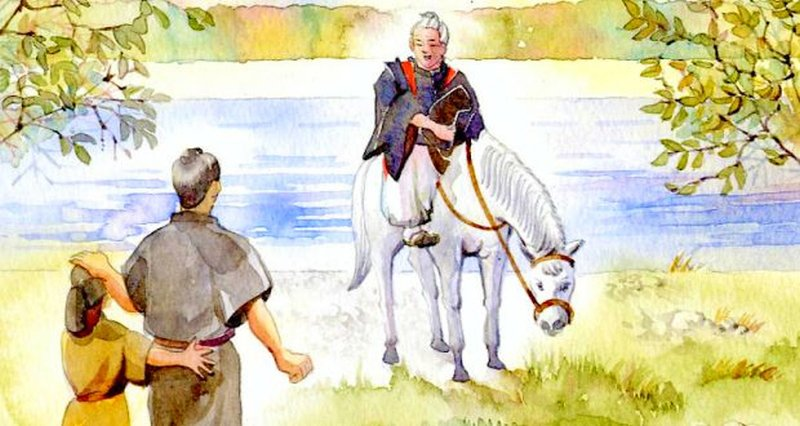
     There was an old man in a village, very poor, but even the kings were jealous of him because he had
a beautiful white horse.
  Kings offered fabulous prices for the horse, but the man would say, “This horse is not a horse to me, he is a person.  And how can you sell a person, a friend?”  The man was very poor, but he never sold the horse.  One morning, he found that the horse was not in the stable.  The whole village gathered and said, “You foolish old man!  We knew that someday the horse would be stolen.  It would have been better to sell it.  What a misfortune!”

The old man said, “Don’t go so far as to say that.  Simply say that the horse is not in the stable.  This is the fact; everything else is a judgment.  Whether it is a misfortune or a blessing I do not know, because this is just a fragment.  Who knows what is going to follow it?” 

People laughed at the old man.  They had always known that he was a little crazy.  But after fifteen days, suddenly one night the horse returned.  He had not been stolen, he had escaped into the wild.  And not only that, he brought a dozen wild horses back with him.  Again the people gathered and they said, “Old man, you were right.  This was not a misfortune, it has indeed proved to be a blessing.”  The old man said, “Again you are going to far.  Just say the horse is back, who knows whether it is a blessing or not?  It is only a fragment.  You read a single word in a sentence – how can you judge the whole book?”

This time the people did not say much, but inside they knew that he was wrong.  Twelve beautiful horses had come…  Of course it was a blessing!

The old man had an only son who started to train the wild horses.  Just a week later he fell from a horse and both his legs were broken.  The people gathered again and again they judged.  They said, “Again, you proved right!  It was a misfortune.  You only son has lost the use of his legs, and in your old age he was your only support.  Now you are poorer than ever.” 

The old man said, “You are obsessed with judgment.  Don’t go that far.  Say only that my son has broken his legs.  Nobody knows whether this is a misfortune or a blessing.  Life comes in fragments and more is never given to you.”

It happened that after a few weeks the country went to war, and all the young men of the town were forcibly taken for the military.  Only the old man’s son was left, because he was crippled.  The whole town was crying and weeping, because it was a losing fight, and they knew most of the young people would never come back.  They came to the old man and they said, “You were right, old man, this has proved to be a blessing.  Maybe your son is crippled, but he is still with you.  Our sons are gone forever.”

The man said again, “You go on and on judging.  Nobody knows!  Only say this, that your sons have been forced to enter into the army, and my son has not been forced.  But only God knows whether it is a blessing or a misfortune.”

“Judge ye not” – otherwise you will never become one with God.  With fragments you will be obsessed, with small things you jump to conclusions.  Once you judge you have stopped growing. 

      Judgment means a stale state of mind.  And mind always wants judgment, because to be in process is always hazardous and uncomfortable.  In fact, the journey never ends.  One path ends, another begins.  One door closes, another opens.  You reach a peak, a higher peak is always there.  God is an endless journey.  Only those who are so courageous that they don’t bother about the goal but are content with the journey, content just to live the moment and grow into it, only those are able to walk with God.

Friday, August 19, 2022

A Closing Thought on Social Regression

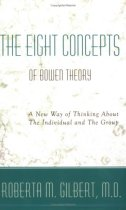
I have been passing along some thoughts over the last few days from Roberta Gilbert’s book, The Eight Concepts of Bowen Theory, that show that our society today may be in crisis. Today, I would like to pass along one final thought on this (Again from Gilbert's book)…

How many people would it take, doing just one of the following -

  • Connecting with their generations, eliminating family cutoffs
  • Educating themselves as to the facts in our society – the regression (the social crisis)
  • Becoming clear on their guiding principles, being guided by them instead of political correctedness or groupthink
  • Taking a stand, after careful consideration
  • Defining a self in their families
  • Becoming principle-guided parents, rather than projecting a worried focus

- to bring the regression to an end? One can only guess how many it would take, but it is a fascinating question.

Wednesday, August 17, 2022

An answer to Social Regression

Yesterday, I looked at some statistics from Roberta Gilbert’s book, The Eight Concepts of Bowen Theory, that show that our society today may be in crisis. That, according to Family Systems Theory, or Bowen Theory, we may be in a time the theory refers to as Social Regression.

What do we do about it? How can change the course of society? In a family system, in order for the system of change, one person in the system, preferably a parent, will need to make a stand for higher and better functioning of self. They will begin to function better in the system, and in time, the system will react differently and change in the system will come about. Can we apply this to Society as a whole?

Roberta Gilbert makes the following suggestions of how we can make a difference:

1. Learn the facts and begin to make a difference. If societal regression is to turn around, people will have to get out of denial and start learning what is really taking place in society. This will mean reading more books and searching outside the usual media sources for facts. There is little time on TV for imparting the big picture – all the facts.

2. Learn to “think systems” in families and in organizations. Under the effects of heightened anxiety, people tend not to see the “big picture” or to think systems.” Rather they tend to think “cause and effect,” laying blame (on others).

3. Get clear on one’s guiding principles and learn to think according to them rather than what society tries to dictate. If one believes the family to be important, for example, one will already be standing contrary to what much if not most of society dictates.

4. Take a stand, after careful consideration address the problems in accordance with principles. With clarity on the facts, and as much information on the process as possible, guided by one’s best principles, a stand must eventually be taken.

Tomorrow, one final thought on the problem of social regression according to family systems theory.

Monday, August 15, 2022

Social Crisis?

I have just finished a class in Family Systems Theory, and have been doing some further reading. Essentially this theory, also called Bowen Theory after its founder, Murray Bowen, indicates that we are part of a system, and we operate as part of a system. As one person in a system changes, we react to that change, and the whole system changes. I find this very interesting in that when we change, we can change the system. I can use this in counseling people to help them realize they can change the family by changing how they react in the family.

One of the concepts in Family Systems Theory is that the theory also works to affect the emotional processes in society as a whole, not just members of a family or work system. To support this concept on a society wide basis, Roberta Gilbert, in her book, “The Eight Concepts of Bowen Theory,” Gilbert suggests that we are in a period of social regression. To support this, she brings out some interesting statistics:

In 1940 the teachers in California were polled to find out what they considered the most troublesome problems they faced. The results were: Talking, Chewing gum, Making noise, Running in the halls, Getting out of line, Wearing improper clothing, and Not putting paper in the wastebasket.

Again, in 1990, fifty years later, they were polled. This time the answers were quite different: Drug Abuse, Alcohol abuse, Pregnancy, Suicide, Rape, Robbery, Assault.

In fifty years our society has changed a great deal if the schools are any indication.

Consider also that between 1963 and 1993 the crime rate went up 360%, youth crime is up 200%, teen pregnancy is up 600% and teen suicide is up 300% (now the second most important cause of death in teens, after accidents). One in five teens attempted suicide, single parents increased by 300%, SAT scores are down 7% and drug use is up over 1,000%.

These statistics show an overall deterioration in our society. If the theory is correct, and we are in a time of social regression, what can do about it? We’ll look at Gilberts ideas in tomorrow’s post…

Tuesday, April 26, 2022

The Lord will fight for you...


“The Lord will fight for you; you need only be still.”

Exodus 14:14


The scene here is the end of the Israelite time of slavery in Egypt.  Moses went to Egypt to
ask Pharoah to let the Israelites go.  He said no.  God sent a sign, a plague of blood, all the waters in Egypt turned to blood.  Moses again asked Pharoah, Pharoah again said no.  So God sent more plagues – frogs, gnats, flies, all the livestock in Egypt died, people broke out in boils, hail destroyed crops, locusts ate what was left, the land turned dark for three days, and after each plague, Moses asked Pharoah, Pharoah said no.  Finally the last plague was the death of the firstborn, every firstborn son in Egypt died, and Pharoah finally said go.

But we saw in Exodus 14:5, “When the king of Egypt was told that the people had fled [the Israelite people – the Egyptian slaves], Pharoah and his officials changed their minds about them and said, ‘What have we done?  We have let the Israelites go and have lost their service.’”

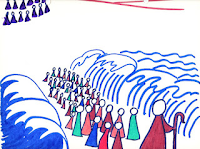
So Pharoah pursued them, we heard the numbers of chariots, all of Pharoah’s army was in pursuit of the Israelites.  And the Israelites were camped out along the Red Sea, seemingly trapped when the army was approaching.  If we kept reading we would have seen the miraculous deliverance, the parting of the sea, the Israelites crossing on dry ground, the Egyptian pursuit, the sea closing in again, destroying the Egyptian army.

But I want us to see tonight, is the last verse that I shared.  This was part of the reading for last night’s Prayer for Healing service, and it really stuck with me.  The last verse read, “The Lord will fight for you; you need only be still.”

We saw how anxious the Israelites were.  They were arguing with Moses, if you just left us alone in Egypt it would have been better.  We would much rather be slaves then die in the desert.  They were fearful, scared, sure they were going to die.  And Moses said, “The Lord will fight for you; you need only be still.”  And the Lord did.  And the Israelites were saved.

I want to point that out because in our own lives we have plenty to be anxious about.  There are things that don’t look so good, we don’t know how they might play out.  Health scares.  Finances, the stock market drops lower every day.  Inflation – the government says it’s 7 ½ %, but our chicken for our chicken BBQ is up 25%, gas, while coming down now, has doubled, up 100%.  Groceries are more expensive every week.  A whole lot more than 7 ½ % overall.

It can seem like we’re fighting just to hold our own.  But remember what Moses said, “The Lord will fight for you; you need only be still.”  Trust in God, turn everything over to Him, and be still.

Wednesday, April 20, 2022

Maundy Thursday relflections

I wanted to pass along my reflections from the Maundy Thursday service we held at Waverly First Baptist Church.  Maundy Thursday was the night that Jesus celebrated the Passover with his disciples.  It was the night that he washed their feet.  It was the night, later, that he was arrested.  So we celebrate it every year, sometimes by a Seder Service, looking at what was done during the Passover Seder Service, and sometimes, like we did this year, with a service remembering that evening in the upper room.  

Here is the devotion that I gave in this service...

Our gospel reading from John 13:1-17; 31b-35 stresses the washing of the feet.  And a lot of churches, on this night, have a service that features, no pun intended, the washing of feet.  Here’s my take on that, I don’t wash feet, not because I think that I’m at all above washing feet, but because I don’t see that, in this passage, as a lasting ordinance that Jesus wants us washing each other’s feet.

I think to understand what Jesus is doing here, we need to understand the context in which it happens.  In the first century, there were no sidewalks.  People walked on dirt roads that were often little more than footpaths or trails.  And they were dusty.  And they wore sandals when they walked, open sandals.  They were designed to protect the soul of your feet, with little more than leather straps to hold them on.  Open sandals.  We still have similar things today.

But when you enter a home, you took your sandals off, because you don’t want to track all that dust into people homes.  So you usually went barefoot inside.  But the sandals didn’t keep your feet clean, the tops would get as dusty as the bottoms of your feet.  So they often had servants to wash your feet as you entered someone’s home.

So we come to night of Jesus celebrating the Passover feast with his disciples.  There were just the twelve disciples present, there weren’t any servants there.  I understand that some of the disciples went on ahead to prepare the meal, that my interpretation.  This wasn’t a restaurant, this was the upper room of someone’s house that Jesus was allowed to use.  Nowhere does it say that the meal was prepared for them, in fact in Matthew 26:19, it says, “So the disciples did as Jesus had directed them and prepared the Passover.” 

My point in that is that it was just the disciples.  Some of them went ahead and prepared the Passover meal, but no one thought about cleaning their feet.  But this is a borrowed upper room, you want to keep it as clean as possible, So Jesus took advantage of the opportunity to teach them a lesson about serving one another.  It’s interesting that while many churches think that Maundy Thursday is all about Jesus washing each others feet, John is the only one of the four gospels that tells about the feet washing.

And, interesting enough, John doesn’t mention communion, the Lord’s Supper isn’t mentioned at all in John’s gospel, while all three of the other gospels mention it, and don’t mention feet washing.  To me, as I look at the things that happened at that Passover meal, I see communion as a lasting ordinance, and the washing of feet as just another lesson on how we should be serving one another.

So tonight, we’re emphasizing communion, or the Last Supper.  We know from our Seder services in other years that communion wasn’t just given during any old meal.  This was the Passover seder, where they remembered the exodus from Egypt, one of the greatest things to happen the Jewish people in the history of the Jewish people.  

And during the meal, Jesus took symbols from the Passover, and applied them to himself.  So that God’s people would remember Jesus.  And monthly we come together at the table, and we eat bread, though it’s not unleavened bread, we break bread, or at least we did before Covid, and the bread, in the Passover was called the Afikomen, that term literally means “the one to come.”

It comes up in the seder early, when the host takes three pieces of unleavened bread, breaks the middle one in half, and tells the children to hide their eyes while he hides that piece of bread.  Then he says these words, “The Afikomen will return to end our Passover Seder.”  For thousands of years, the Jewish people have been uttering those words as they began their Passover celebrations.  Jesus was the one who came, the Afikomen, who came to end their Passover Seders.  They don’t do them anymore.  Now, we remember Jesus, and his death on the cross for our sins, and we remember him through the Lord’s Supper, “in remembrance of me.”

Our first reading was from Exodus, and reminds us the requirements for the Passover.  What they had to do on that first Passover.  But it wasn’t just that.  It was given as a lasting ordinance.  They were to do it each year, to remember what God had done for them.  That’s why we do communion, to remember what Jesus did for us.

In 1 Corinthians, we saw a familiar passage about the Lord’s Supper.  Paul passed on that ordinance to the Gentile people in Corinth.  They didn’t have the law, they didn’t have to observe the Passover, but Paul is telling them that they should be doing the Lord’s Supper, to remember what Jesus had done for them. 

And we talked about the Afikomen already, represented by the bread, I want to talk about the cup next.  Paul said, in verse 25, “In the same way, after the supper he took the cup, saying, ‘this cup is the new covenant in my blood; do this, whenever you drink it, in remembrance of me.’”  Back to the Passover Seder, if you remember that, after the supper, they had the third cup, there were four cups in the Seder. 

The third cup was the cup of redemption, the reminder that God was going to redeem His people.  Jesus said, this cup is the new covenant in my blood.  It was the cup of redemption for the Jewish people.  In Jesus’ blood, the people of God find redemption.  That’s the symbolism here.  Jesus is the redemption of the people of God.  In His shed blood, we find redemption.

Which brings us back to the feet washing, and the last reading from John.  But at the end of chapter, they are still in the upper room, Judas had just left, and Jesus gives them a new command, “Love one another.  As I have loved you, so you must love one another.  By this all men will know that you are my disciples, if you love one another.” 

The foot washing was a way to show our love for others.  He served as a servant, by washing their feet, now they’re told to go and serve one another.  And love one another.  And it’s through our service, and it’s through our love, that we show our faith to others. 


Thursday, August 5, 2021


 “Come my children, listen to me and I will teach you the fear of the Lord…  Keep your tongue from evil and your lips from speaking lies.  Turn from evil and do good; seek peace and pursue it.”
Psalm 34:11

I’ve titled this devotion, “Fear the Lord.”  There are a number of passages that talk about fearing the Lord, and how it’s important to fear the Lord.  In fact, I think those concepts that are repeated are the more important concepts.  If something is repeated a lot, we should make sure we’re doing that, right.

The expression, Fear the Lord’ is one of those concepts that’s repeated.  In Deuteronomy 6:1-2, right after God gave the Law in chapter 5, he gives the reason he gave the law in chapter 6, “these are my commands, decrees, and laws the Lord your God directed me to teach you to observe in the land that you are crossing the Jordan to possess, so that you, your children and their children after them may fear the Lord your God as long as you live…”  We don’t follow the Law any more, Jesus freed us from the bondage of the law and all that represented, but the idea of fearing the Lord is still important.

In 1 Peter 2:17, Peter is giving some instructions on how to live, and he says, “Live as free men, but do not use your freedom as a cover-up for evil; live as servants of God.  Show proper respect to everyone:  Love the brotherhood of believers, fear God, honor the king.” 

In Romans, in chapter 3:10-11, we’re familiar with 10, it says, “There is no one righteous, to even one; there is no one who understand, no one who seeks God…”  He finishes his rant in verse 18, “There is no fear of God before their eyes.”  And that sums up the problem, there is no fear of God. 

The expression “Fear the Lord,” shows up 24 times.  If something is repeated 24 times, that must be really important, right?  And if that’s not enough, “Fear God” and “Fear of God” shows up an additional 21 times.  So the idea of fearing the Lord shows up 45 times – do you get the idea that it’s important.  That’s something we should be doing?

But here’s the thing, while there are a lot of verses telling us to fear the Lord, there aren’t a lot about what that looks like.  What does it mean to fear the Lord?  What do you do?  That’s what we really want to know, right?  If we’re going to fear the Lord, and we all want to, it’s important, so what do we do, what’s that look like, so I can do it. 

There’s one other verse I want to share with you that talks about the Fear of the Lord, because I think it gives us an answer, and there aren’t many that do.  It’s Psalm 35:8-14..

And verse 11 is the key for us, he says, “Come my children, listen to me and I will teach you the fear of the Lord.”  If the fear of the Lord is that important, we want to know what it looks like.  Let’s listen to what he says and see if he’ll teach us what it looks like:

1.  Keep your tongue from evil.  That the first part of verse 13.  What does it mean to keep your tongue from evil?  It means to watch what we say.  Say good things, things to build each other up, don’t say bad things, things tear each other down.  Ephesians 4:29 says, “Do not let any unwholesome talk come our of your mouths, but only what is helpful for building up others, according to their need, that it may benefit those who listen.”

James talks a lot about our words in chapter 2.  In verse 5, “The tongue is a small part of the body, but it makes great boasts.  V 6, “The tongue is like a fire, a world of evil among the parts of the body.  It corrupts the whole person, sets the whole course of his life on fire, and is itself set on fire.”  V. 8, No man can tame the tongue.  It is a restless evil, full of deadly poison.”  And finally in verse 9, he sums it up by saying, “With the tongue we praise our Lord and Father, and with it we curse men, who have been made in God’s likeness.  Out of the same mouth come paise and cursing.  My brothers, this should be not.”

To fear the Lord, we need to keep our tongue in check.  And we’re not showing a fear of the Lord, if we don’t.

2.  Keep your lips from speaking lies.  I don’t know about you, but if you’re anything like me, you hate it when people lie.  I hear it all the time, people lie.  Since I’m a pastor, they don’t really want me to know how their doing.  They really want me to know what they’ve been doing.  And if their caught, they certainly want to be judged by it. 

But I’ll let you in on a little secret, God hates lying as much as you or I hate lying.  It was one of the 10 biggies, right, the 10 commandments.  Thou shalt not lie.  Colossians 3:9 says, “Do not lie to each other, since you have taken off your old self with it’s practices and have put on the new self, which is being renewed in knowledge in the image of its creator.”  In other words, we should lie, that’s what unbelievers do.  We live like Christ, and that means we’re honest.

3.  Turn from evil and do good.  My favorite example of what this looks like is in Galatians, and it involves the fruits of the spirit.  In Galatians 5, he starts talking in verse 19 about what is evil:  “sexual immorality, impurity and debauchery; idolatry and witchcraft; hatred, discord, jealousy, fits of rage, selfish ambition, dissensions, factions and envy; drunkenness, orgies and the like.”  That’s the evil we need to turn from.  “I warn you, as I did before, that those who live like this will not inherit the kingdom of God.”

Then in verse 22 he starts to tell us the good that we need to be doing – turn away from the evil and do good….  The good is the fruits of the Spirit:  “love, joy, peace, patience, kindness, goodness, faithfulness, gentleness and self-control.”

4.  Seek peace and pursue it.  Romans 12:18 says, “If it is possible, as far as it depends on you, live at peace with everyone.”  One of the beatitudes in Matthew 5 says, “Blessed are the peacemakers, for they will be called sons of God.”

“Come my children, listen to me and I will teach you the fear of the Lord…  Keep your tongue from evil and your lips from speaking lies.  Turn from evil and do good; seek peace and pursue it.”


Wednesday, August 4, 2021

The First Law of Motion


Sir Isaac Newton discovered, and later published, two Laws of Motion.  His first Law of Motion states that “a body at rest will remain at rest unless an outside force acts on it, and a body in motion at a constant velocity will remain in motion unless acted upon by an outside force.”  We all know that physical law, we can probably recite it, or at least paraphrase it.  We all know that an object in motion tends to stay in motion, and a body at rest tends to stay at rest.

 If you’ve seen a rock on the ground, you’ve seen an example of this physical law.  If you watch it, you’ll notice that it will stay right where it is.  It is an object at rest and will stay that way until something acts on it, till something moves it.  If you kick it, you’ll see it will tend to go a long way, until friction and gravity bring it to a stop.  That’s a real basic example, but I think you get the basic premise.

 That law applies to people, as well.  Those that seem to be really busy, will tend to stay really busy, finding things to do until something happens to force them to slow down.  Those who aren’t really busy, tend to take it easy until something happens to force them to get busy.

 This has some implications for the church.  Because now, in our post Covid-19 era, assuming the worst is over and this blip in the Delta variant will be short lived, our churches have seen more people staying home, and those who do go out, seem to be more content with just Sunday morning attendance than before.  Numbers are down, and this law seems to suggest they’ll stay slowed down until something happens to “get them in motion again.” 

 We saw the inverse when this pandemic started.  We were an active church, with a number of ministries going on, and a lot of participation.  We were a church in motion.  And the law states that we could expect to more or less stay in motion until something happened.  The something that happened was the pandemic.  We were forced to stay home for a few months.  We were forced to stop our activity, or at least dramatically reduce it, in the name of safety. 

 Now, we are a body at rest, and we need to start moving again.  Because if we don’t make the effort, the principal suggests that we will stay at rest until something happens.  What can be the motivator?  How can we begin to rebuild?  We can start by meeting together for dish-to-pass dinners.  Some don’t like the dish-to-pass format, so maybe we could have someone offer to do the main course, then someone to do sides, alternating among the people who come, at least for a while.  I don’t expect the number coming together would be too great, at least not as we get started.

 Or we could come together for game nights, or movies, or going out to a restaurant together.  Anything that gets us out of the house, bringing us together as a church family, and promoting fellowship within that family, will do the trick. 

 So what do you think?  Are we ready to “get in motion” again?  What would you like to do?  What do you get excited about?  Let me know? 

Wednesday, September 2, 2020

Condemned Already

On Wednesday's, on Facebook, we do a Wednesday Bible Study, featuring a RightNow Bible Study link that you can watch, and then comment on.  There is a study guide available for a free download, and it's a neat way to continue Bible Study during our time of trying to stay safe from the virus.

Currently, we're doing a study by Dr. Tony Evans, titled The Gospel of John, and it's a great study, because Tony Evans is a great teacher.  This mornings lesson involved John chapter 3, and if you're a believer, that passage is probably somewhat familiar to you.

It's the passage where Nicodemus, a religious leader, a ruler of the Jewish ruling council, sneaks into see Jesus at night, so no one would see him, and began asking questions.  I like the passage, because Nicodemus is close to the kingdom of God, he has questions, and he knows he won't find answers from fellow Jewish leaders.  He want's to know who Jesus is.  And I admire that in anybody, the boldness and courage it sometimes takes to ask those questions.  Especially from a Jewish leader in Jesus' day.

It's in this passage we see one of our favorite passages, John 3:16, "For God so loved the world that he gave his one and only Son, that whoever believes in him shall not perish but have eternal life."  

But that's not the verse I want to talk about today.  It's the next verse, verse 17, that I want to look at this morning.  Because while 3:16 shows compassion, 3:17 shows why it's really needed.  Verse 17 reads, "For God did not send his Son into the world to condemn the world, but to save the world through him."  

I think a lot of people today think that Jesus is a condemning person, that he is always condemning you for having fun, for living the way you might want, for doing what you want. And I admit, it can feel convicting to face your sins and have to deal with them when you want to grow closer to Jesus.  

But the truth is, it's not Jesus that condemns us.  The verse tells us that we are condemned already, we are condemned by our sin.  You are condemned already, because you are a sinner already.  Following Jesus doesn't condemn you.  Following Jesus frees you from the condemnation you're already under.   

Jesus didn't come to rub your nose in it, He came to free you from it.

That's what following Jesus does.  It gives us a way out of our sinfulness.  It's gives a way to address the pain in our hearts, the guilt, the heartache, the lack of feeling, the hurt.  Because those feelings come from a separation from God.  A separation from God comes from our sinfulness.  Address the sinfulness, the feelings of despair go away.  The hopelessness can go away.

Jesus didn't come to condemn you.  He loves you.  He came to rescue you, to save you, to make you right with the God who made you, who also loves you.  

If you would like to know more, please comment or touch base with me.


Thursday, August 13, 2020

Daily Devotion | August 13 | More and More

 Here is today's daily devotional thought from Pastor Steve. Today, Pastor continues some thoughts from yesterday's passage on 1 Thessalonians 4:1...


Wednesday, August 12, 2020

Devotional thoughts | August 12 | Learning to Live

Pastor Steve shares a short devotion titled learning to live, based on a passage from 1 Thessalonians 4:1. Please leave a comment, I would love to hear what you think...


Thursday, July 30, 2020

Daily Update & Devotion | July 30 | The Awesomeness of God

Here is my daily update and devotion for today, Thursday, July 30, 2020.  Today we look at a vision of Julian of Norwich in the 1300's, to get a glimpse of the awesomeness of God.  Leave a comment, I'd love to hear from you...


Wednesday, July 29, 2020

Daily Update & Devotion | July 29 | A baby carriage on the beach...

Here is Pastor Steve's daily update and devotion for Wednesday, July 29, 2020.  Today Pastor looks at some thoughts on seeing a baby carriage on the beach...


Tuesday, July 28, 2020

Live Update & Devotion | July 28 | Trusting in God

Here is my live update and devotion for today, Tuesday, July 28.  Today I'll be looking at the importance of trusting in God...  Please leave a comment, I would love to hear what you think...


Faith First

  Then Peter said, “Silver or gold I do not have, but what I do have I give you. In the name of Jesus Christ of Nazareth, walk.”  Taking him...